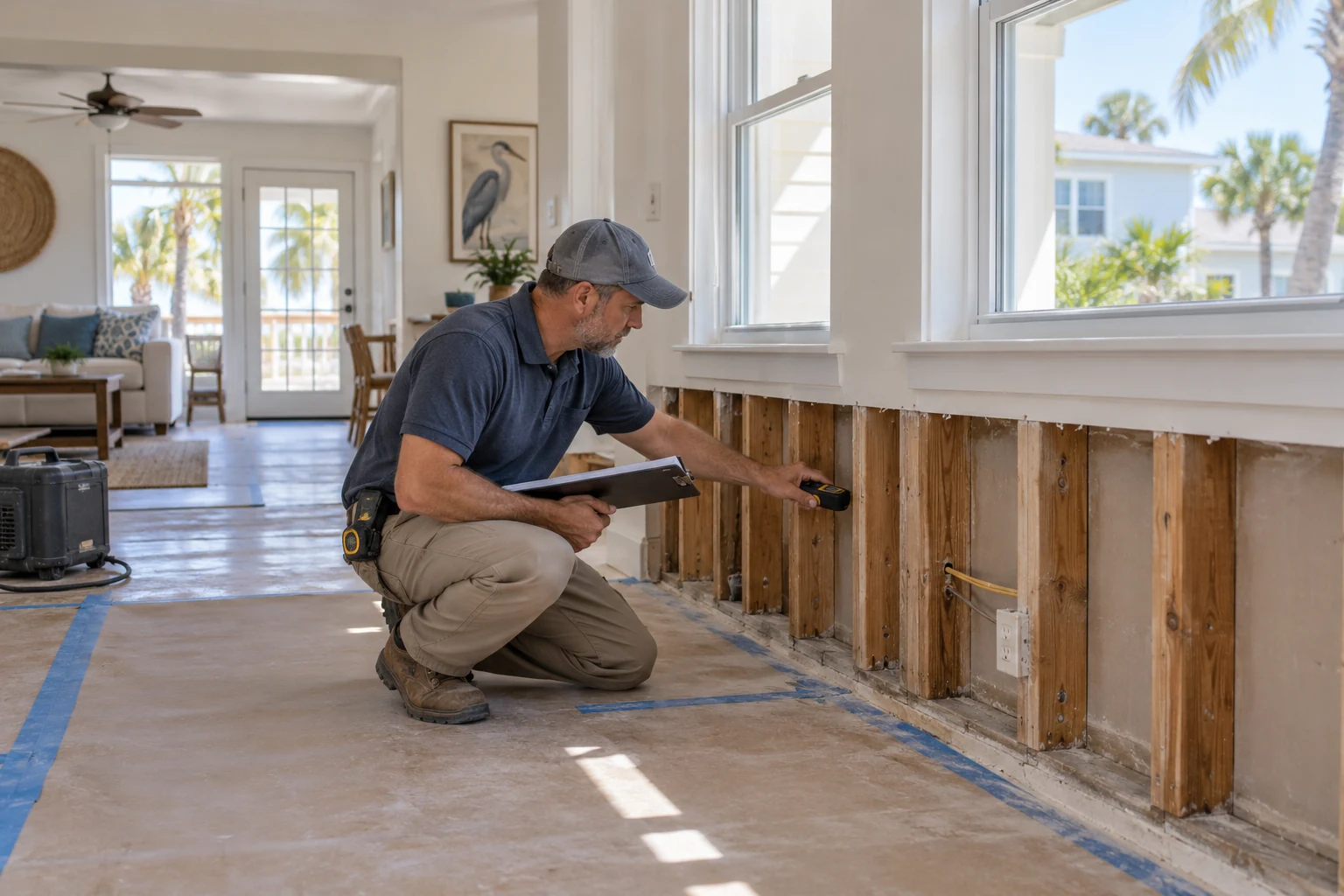
When a storm, roof leak, plumbing failure, or wind-driven rain damages a St. Petersburg property, the first priority is stopping the source and making the building safe. Water extraction, drying, and stabilization may come next. But once that emergency work is complete, many owners are left with a different question: how does the property become a finished, comfortable space again?
That is where reconstruction begins. At Tailor Made Construction Group, our role starts after the source has been corrected and the affected areas are ready for construction repairs. We coordinate the work needed to restore damaged ceilings, walls, flooring, trim, cabinetry, framing, and connected finishes so the property can move from opened-up and dried-out to complete.
Dry-Out and Reconstruction Are Different Stages
Emergency mitigation and construction repair serve different purposes. A mitigation company may remove standing water, set drying equipment, document moisture levels, or remove materials that cannot remain. Reconstruction replaces what was removed and repairs the building components that were damaged.
Before reconstruction starts, the source of the water should be addressed and the affected area should be dry enough for new materials. Covering a continuing leak or installing finishes before the assembly is ready can lead to more damage and duplicated work. If the roof was the source, roofing services through Rain Right Roofing, Tailor Made’s dedicated roofing division, may need to be coordinated before interior repairs proceed.
What May Need to Be Repaired After Dry-Out?
Every property and water event is different. A localized leak may affect one ceiling and a section of wall, while a larger event may reach several connected rooms. A repair assessment should consider the visible damage as well as the transitions required to make the completed work look intentional.
Common reconstruction work may include:
- Replacing removed drywall and damaged insulation
- Repairing ceiling surfaces, texture, and paint
- Replacing baseboards, casing, doors, and interior trim
- Repairing or replacing flooring and transitions between rooms
- Rebuilding damaged cabinetry, vanities, or built-in components
- Correcting framing or sheathing damage identified during the repair
- Coordinating electrical, plumbing, roofing, or mechanical work related to the damaged area
Our storm and water-damage repair service focuses on this construction phase. Tailor Made does not present reconstruction as emergency extraction, structural drying, or mold remediation. Keeping those roles clear helps property owners understand who is responsible for each stage.
Start With the Current Condition of the Property
A useful reconstruction plan begins with what remains after mitigation. The team should review which materials were removed, which areas are open, whether utilities were disconnected, and what documentation is available. Photographs, moisture reports, inspection notes, and insurance estimates can provide helpful background, but the contractor still needs to evaluate the repair area in person.
This review also identifies practical issues that can affect the work. Flooring may run continuously into an undamaged room. A cabinet style may no longer be available. Existing paint or texture may be difficult to blend at a small patch. Older construction may reveal previous alterations once finishes are removed. These details influence how the repair boundary should be planned.
Build the Repair in the Right Order
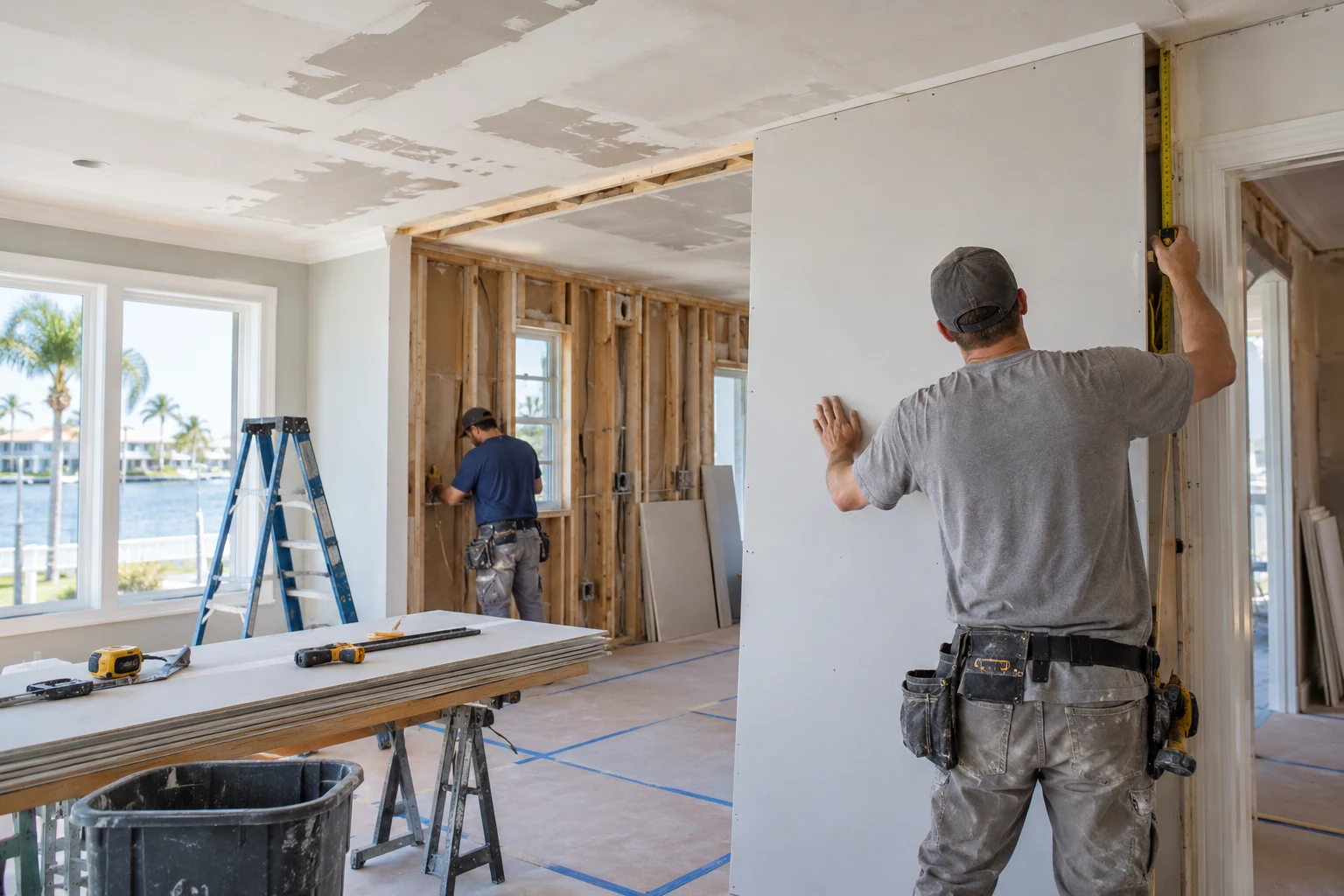
Reconstruction is most efficient when work is sequenced around the building assemblies rather than treated as a collection of unrelated patches. Framing and concealed utilities are addressed before insulation and drywall. Drywall finishing comes before final paint. Cabinetry, flooring, trim, and fixtures must be coordinated so one installation does not damage or block another.
A typical sequence may include:
- Confirming that the original source has been corrected
- Reviewing the dry, exposed repair areas and defining the construction plan
- Completing necessary framing and rough trade work
- Installing insulation, drywall, and other wall or ceiling materials
- Restoring flooring, cabinetry, trim, paint, and finish details
- Completing final review, cleanup, and remaining touchups
The exact order depends on the property and the work involved. A condominium may also require association coordination, building access procedures, or approved work hours. A commercial property may need repairs phased around tenants or business operations. Our commercial remodeling team can coordinate reconstruction when the damaged space is used for business.
Insurance Documents Are Helpful, but the Repair Plan Must Fit the Property
An insurance estimate can be an important starting point, but it does not replace field verification or a construction plan. Quantities, material assumptions, access requirements, code-related work, and finish transitions may need to be clarified before repairs begin. Property owners should keep photographs, reports, estimates, receipts, and written approvals organized throughout the process.
Tailor Made can explain the construction work we propose and document changes when concealed conditions affect the repair. Coverage decisions and claim interpretation remain between the owner and the insurance professionals involved. That distinction keeps the contractor focused on producing a clear, buildable repair.
Know When a Small Patch May Not Be Enough
Some damage is truly limited. In other cases, a narrow patch creates a poor transition or leaves a connected issue unresolved. The appropriate repair area depends on the materials, the location of the damage, and the condition of the surrounding finishes.
A broader repair may be worth discussing when:
- Flooring continues through several rooms without a natural stopping point
- Matching cabinets, tile, trim, or texture are unavailable
- The opened area reveals damaged framing or outdated utility work
- Several repairs overlap in the same kitchen, bathroom, or living area
- The owner was already considering improvements to the affected space
That does not mean every water-damage project should become a major remodel. It means the repair should be evaluated as part of the whole room so the finished result is durable, coordinated, and appropriate for the property.
Move From Damage to a Finished Space
The period after dry-out can feel uncertain because the emergency has passed but the property is not yet back together. A clear reconstruction plan turns that uncertainty into an organized sequence of decisions, repairs, inspections, finishes, and final details.
Tailor Made Construction Group provides construction repairs for homes, condominiums, and commercial properties in St. Petersburg and throughout Pinellas County. We coordinate the building work after the source has been addressed and the property is ready to be restored.
Plan the Reconstruction
Ready to restore a storm- or water-damaged property?
If your St. Petersburg property is dry and ready for construction repairs, call Tailor Made Construction Group at 727-914-9145 to schedule a consultation.
Call 727-914-9145 ↗